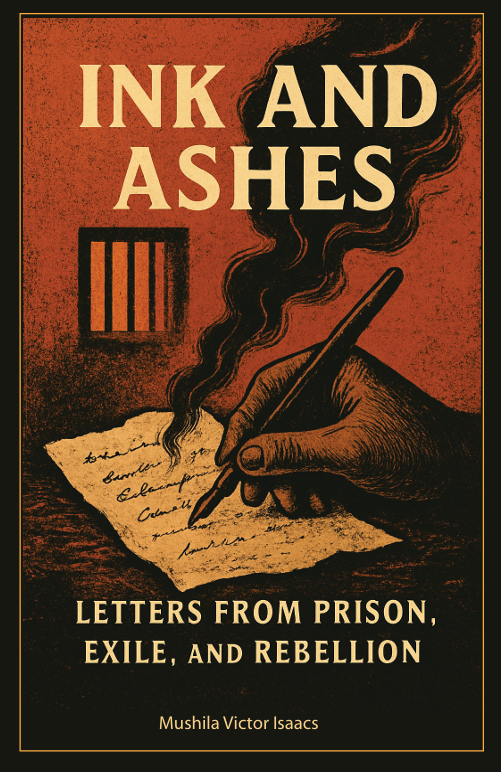
Garissa Prison, 2022
I write this letter with cracked fingers, tracing the edges of this worn envelope like one would trace the banks of a long-dead river. The heat here is not merely oppressive—it is vengeful. It presses on the chest like a verdict, like a punishment not listed in any court record. It seeps through walls and uniforms and into dreams.
When they first brought me here, the air was dry but not yet cruel. Now it slices the tongue like broken glass. Even the guards sweat shamefully, their khaki collars stained with the marks of human fragility. The sun in this part of Kenya has learned how to burn with precision. And inside these walls, there is no shade left to pray under.
We are eighty-seven men in a cell built for twenty-five. There is no fan, no flowing air. But worse, there is no clean water. We drink from rusted taps, water the color of betrayal. Brown. Bitter. At times, the smell is so foul it feels as though the pipes are haunted by the ghosts of rivers that once ran clean. I used to dream of the Tana River, where I learned to swim as a boy. That river, too, is dying—choked by dams, poisoned by upstream industries, diverted by men with papers and pens and power.
Here in Garissa, climate injustice is not a conference topic. It is what we swallow. It is what coats our skin. It is what we breathe. It is the thin film of soot on our windowless walls, the film of despair that covers our coughs at night. This prison was not built to withstand climate change, and yet it is being forced to. Like all of us.
In exile or imprisonment, the body becomes a battleground. But so too does nature. They ration our water like it is a privilege, not a right. If you speak out, they cut your hours at the tap. If you organize a protest, they shut the water completely for a day or two. Hunger strikes gain media attention, but thirst strikes go unnoticed. Who writes about dehydration? Who counts the men who die of kidney failure in a cell? Or the boy whose skin broke into rashes after bathing in chemical water?
I met Jillo here. He was arrested after protesting the pollution of Lake Turkana by a foreign-owned oil company. He was a fisherman once, a father of four. His crime was speaking truth to the armored vehicles that rolled into his village. Now he limps across the cell floor, his knees swollen, his eyes red from the untreated typhoid he caught here. We share stories in whispers, in codes etched into soap bars, on scraps of Bible pages passed like contraband.
“Water is political,” he told me once. “Water is the new ballot. They count it, restrict it, weaponize it.”
I have come to believe him.
We are not only prisoners of the state. We are prisoners of the climate. Behind these walls, rising temperatures make old wounds fester faster. We watch as the guards wear sunglasses and drink bottled water in front of us, tossing empty plastics like grenades onto the dust. They know we will scramble to pick them up—not for recycling, but to collect the few drops left inside.
Sometimes I wonder if the trees outside still remember us. I imagine them craning their necks over the wall, trying to see if the ones who once shaded under them are still breathing. But trees have their own wars now—felled for charcoal, sacrificed for road projects, or simply dried out by heat that should not belong here.
Environmental injustice is not a future apocalypse. It is an ongoing crime scene. And prisons like Garissa are its hidden graveyards. No one writes climate policy with prisoners in mind. No UN envoy ever toured our water tanks. No climate summit streamed live into this cellblock.
And yet, we are on the frontline.
Outside, men in suits debate carbon credits and net-zero futures. Inside, we barter soap for a sip of cold water. We collect rain in buckets when the sky pities us. We chart clouds like prisoners once charted escape routes.
I write this letter as an archive, not an appeal. For the world must know that environmental justice without prison justice is a broken promise. You cannot greenwash the suffering we endure in concrete cages.
Tell the policymakers that climate resilience must include the incarcerated. Tell the diplomats that exile and detention do not pause our human rights. Tell the NGOs to trace the drought lines not just across rivers and farms, but across the backs of prisoners too.
We too are witnesses.
We too bleed under the same sun.
Yours, in hope and heat,
M. K.
Political Prisoner 7782/KE
Garissa, Kenya
Purchase this book to unlock all published chapters, continue reading from where you stopped, and access the complete digital edition.
You have reached the end of the free preview for Ink and Ashes .
Purchase this book to unlock: