Tinka : The Luminary

A Legacy That Rests But Never Dies | Mushila Victor Isaacs

A Legacy That Rests But Never Dies

By Mushila Victor Isaacs

“To everything there is a season, a time to plant and a time to uproot.” — Ecclesiastes 3:2

The savanna, where the song of Hakuna matata — meaning “no problem” — stretched endlessly, shimmered like a golden sea where the whispers of the wind carried stories of ancestors, rulers, and dreamers. In its heart stood two colossal trees, proud and parallel, their shadows running side by side but never crossing.

They were not mere trees. They were living chronicles — guardians of time, mirrors of men, and witnesses to generations that rose and fell beneath their shade.

One was known as Kifaru, the strategist of the winds. He was eighty-one seasons old — towering, thick-barked, his roots coiled deep into the earth like veins of ambition. Around him, silence was not peace but fear. His branches, heavy with military authority, often shaded others from light. The birds that once nested there had long flown away seeking freer skies, if not shackled into guarded cages.

The other was Tinka, eighty seasons old — elegant yet firm, with leaves that shimmered like hope in the morning light. The beings called him the Beloved Tree, for he stood not above but among them. His branches stretched wide to shelter all who came — the weary traveler, the singing birds, even those who once spoke against him.

They stood parallel — close enough to share the same sky, yet worlds apart in spirit. In their early years, both trees grew under the same sun, drinking from the same rain. But when storms came, their choices defined them.

Kifaru learned to bend others so he wouldn’t have to bend himself. His strength became his pride, and his pride became his blindness. He whispered to the winds of strategy, power, and permanence.

Tinka, on the other hand, learned from the storm’s music. When lightning struck his side, he healed not through anger but through patience. His resilience drew songs from the birds and reverence from the creatures of the plains. He believed that even in brokenness, beauty could be reborn.

And so it was — one ruled through fear, the other through faith. One built fences, the other built bridges. Years turned into decades. Seasons painted their bark with wrinkles of wisdom. The savanna grew silent, listening to the rivalry of the parallel giants.

Continue reading “Tinka : The Luminary”

Writing Against Collapse, Dreaming of Renewal

Letters to a Failed State. Mushila Victor Isaacs. Bookshelf. Mushilawrites.com
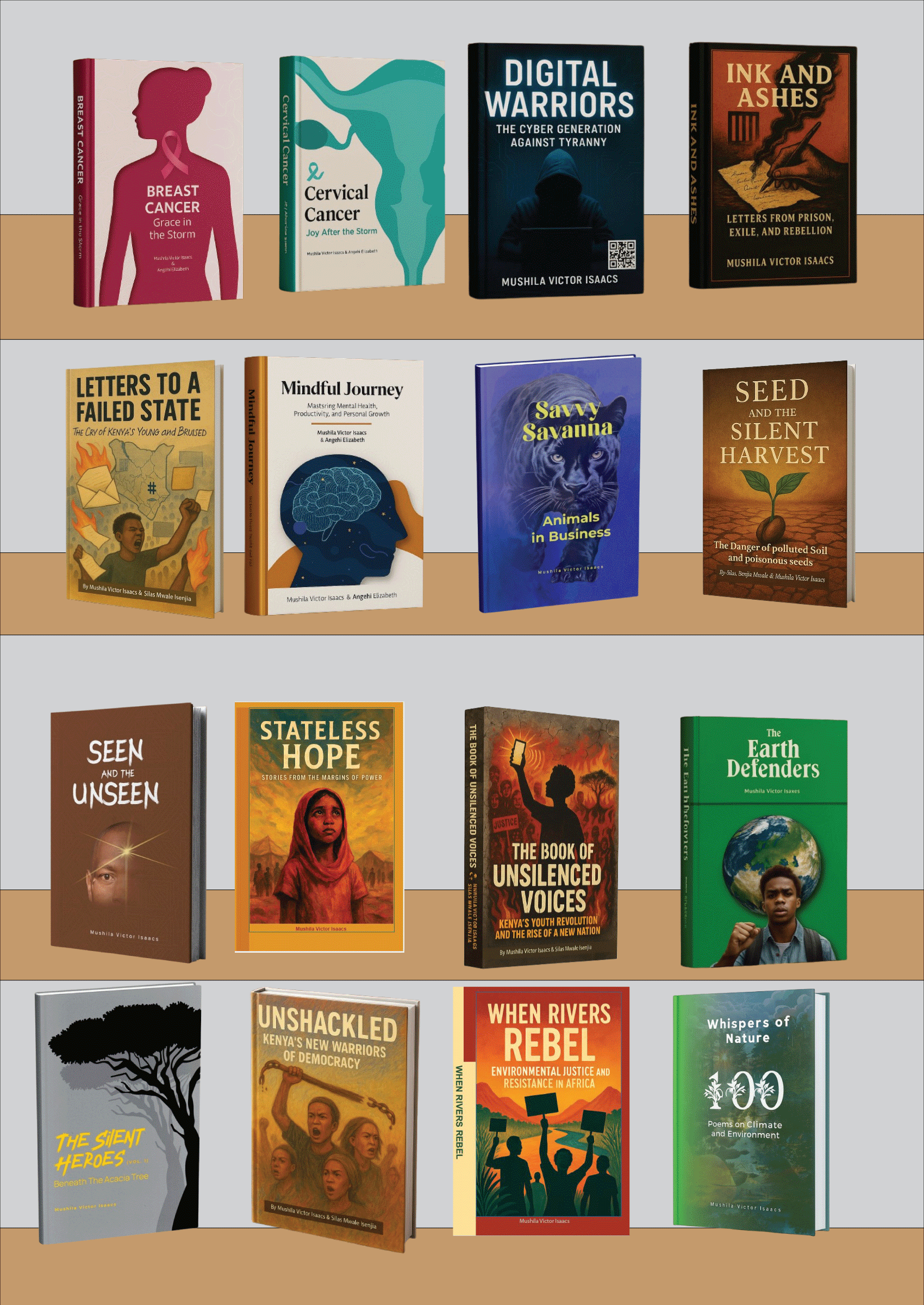
Letters to a Failed State: Writing Against Collapse

Letters to a Failed State

What does it mean to write to a state that has failed you? To pen letters not of admiration, but of anguish, disappointment, and defiance? Letters to a Failed State is born from that paradox—the audacity to address power even when it no longer listens, to hold leaders accountable even when they betray the people, and to speak truth even when the state is deaf.

A failed state is not defined only by the fall of institutions but by the betrayal of its people. It is the mother who cannot access healthcare for her child, the graduate who roams jobless while politicians fly private jets, the farmer whose harvest is stolen by corrupt systems. It is the silence of leaders when floods destroy villages, the negligence when hospitals collapse, and the arrogance of power when citizens cry for justice. To write letters to such a state is to demand a dialogue where none exists—to insist that the people’s voice cannot be erased.

In crafting Letters to a Failed State, I imagined every citizen as a writer. What would their letters say? A letter from a teacher would lament overcrowded classrooms and unpaid salaries. A youth would write about broken promises of empowerment. A refugee would narrate their exile. A patient would question why medicine is a luxury. These letters are both fictional and real, written not in ink alone but in the lived experiences of millions.

The act of writing letters to power has long been a weapon of change. From Martin Luther King Jr.’s “Letter from Birmingham Jail” to Nelson Mandela’s prison letters, history teaches us that when states fail, letters endure. They pierce walls of silence, traveling across time to remind both rulers and citizens of unfinished struggles.

Today, our letters are digital—tweets, blogs, open letters, petitions, viral videos. They are not whispered but broadcast, and they carry the weight of collective frustration and hope. Letters to a Failed State situates itself in this continuum: a modern anthology of resistance, where every word is a protest, every sentence a demand for justice, every page an act of survival.

The state may fail, but the people do not. They adapt, organize, and rise again. From the Arab Spring to African youth-led protests, history repeats a single truth: no failed system is beyond accountability. And even if collapse seems inevitable, renewal is always possible. The letters remind us that every fallen empire leaves behind seeds of new beginnings.

By writing Letters to a Failed State, I hope to contribute to that renewal. Not as a politician, but as a storyteller. Not as a policymaker, but as a citizen. Because the state belongs not to the elite few, but to the collective many. To write is to reclaim, to imagine, and to insist.

Explore: Digital Warriors: Tech for Justice and Youth Activism

Related Reading: Unsilenced Voices

Read Letters to a Failed State Now
#FailedStateLetters #VoicesForJustice #LiteratureForChange #YouthActivism #MushilaWrites #AfricanAuthors #CivicStorytelling #DigitalResistance #JusticeThroughLiterature

Unshackled meaning : Digital resistance, Youth activism, Literary advocacy, and Justice

Unshackled-Kenyas-New-Warriors-of-Democracy-by-Mushila-Victor-Isaacs-2025
Unshackled: Breaking Chains of Silence

Breaking Chains of Silence in a World That Still Resists Freedom

To be unshackled is not merely to break iron chains—it is to reclaim the breath of truth in a world that has mastered the art of suffocation. The word itself carries weight, not just in its syllables but in its history. It is the echo of footsteps marching through colonial streets, the whisper of defiance in censored classrooms, the roar of youth who refuse to inherit silence. It is the heartbeat of those who have dared to speak when speaking was dangerous, to dream when dreaming was forbidden, to rise when rising meant risking everything.

Unshackled is not a metaphor—it is a reality lived by millions. It is a story I chose to tell, not just in ink and paper, but in the pulse of resistance that beats across continents. Writing it was not an act of literary indulgence—it was a confrontation. A reckoning. A refusal to pretend that freedom is evenly distributed, that justice is blind, or that silence is ever neutral.

The book emerged from the soil of lived experience, watered by the tears of those who have watched their rights eroded, their voices dismissed, their futures bartered by systems that speak the language of democracy but practice the rituals of oppression. It is a book born of urgency, crafted in the tension between hope and heartbreak, and offered as a torch to those still walking through the shadows.

In every chapter, I found myself wrestling with the paradox of our times: how nations can celebrate independence while imprisoning dissent, how elections can be held without choice, how development can be measured in GDP while communities starve for dignity. I saw how injustice wears new masks—how poverty is no longer just a lack of resources but a product of engineered inequality, how security is weaponized to silence protest, how education is offered without empowerment.

And yet, amid these contradictions, I saw something else: resilience. The quiet, stubborn, radiant resilience of ordinary people who refuse to be defined by their chains. There is the farmer who stands his ground against land grabbers backed by powerful interests. There is the student who organizes forums in underfunded schools, demanding not just textbooks but transformation. There is the woman who walks into boardrooms and refuses to shrink her voice to fit patriarchal expectations. There is the activist who documents abuses with nothing but a phone and a fierce belief in truth.

Literature, I have come to believe, is one of the last sanctuaries of rebellion. In a world where algorithms curate our realities and headlines are traded like stocks, the written word remains a space where nuance can breathe, where complexity can be honored, where truth can be told without interruption. Unsilenced Voices is a companion to this journey—an exploration of how literature and activism converge in the digital age.

The internet has become the new terrain of resistance. From Nairobi to New Delhi, from Lagos to Lima, youth are mobilizing not just in streets but in servers. Hashtags have become placards. Threads have become manifestos. Blogs have become battlegrounds. And in this digital uprising, Unshackled finds its place—not as a relic of print, but as a living document of defiance.

If you’re an educator, consider using Unshackled in your curriculum. If you’re an NGO, let’s collaborate on storytelling workshops. If you’re a youth leader, host a reading circle. If you’re a donor, support the translation of this work into local languages. If you’re a reader, leave a comment, write a review, or send a message. Let’s build a community around courage. Let’s turn pages into platforms.

📘 Read Unshackled Now
#UnshackledVoices #JusticeThroughLiterature #DigitalResistance #YouthForChange #MushilaWrites #AfricanAuthors #CivicStorytelling #LiteraryAdvocacy #FreedomFighters #GlobalJustice

Digital WWarriors : Tech for Justice and Youth activism,

Digital-Warriors-The-Cyber-Generation-against-Tyranny-by-Mushila-Victor-Isaacs-2025
Digital Warriors | MushilaWrites

Digital Warriors: Coding Resistance, Writing Revolution

#DigitalWarriors #TechForJustice #YouthActivism #MushilaWrites

They do not march in the streets. They do not carry placards. Yet their fingerprints are on every movement. Their battleground is the browser. Their weapon is the word. Their shield is encryption. These are the Digital Warriors — youth who code for justice, blog for truth, and tweet against tyranny.

In an era where activism is often surveilled, censored, or commodified, Digital Warriors reminds us that resistance has evolved. It now lives in code repositories, encrypted chats, and viral threads. This book is not a manual. It is a manifesto. A poetic blueprint for those who refuse to be silenced in the digital age.

At MushilaWrites, we’ve journeyed through climate advocacy, community resilience, and poetic storytelling. Now, we enter the realm of cyber-activism — where youth are not just users of technology, but architects of change.

The stories in this book are electric. One chapter follows a teenage coder in Nairobi who built an app to report police abuse anonymously. Another tells of a girl in Myanmar who livestreamed her village’s displacement, using only a cracked phone and a borrowed signal. These are not just tech tales. They are testimonies of courage, creativity, and conviction.

What makes a digital warrior? It is not fluency in Python or mastery of HTML. It is the refusal to be passive. It is the decision to use digital tools to expose injustice, mobilize communities, and archive truth. It is the belief that every click, every post, every line of code can be a spark.

This book also challenges us to rethink digital literacy. It’s not just about knowing how to use a device — it’s about knowing how to defend your rights online, how to spot misinformation, how to build platforms that serve the people. It’s about turning technology into testimony.

As you read Digital Warriors, you’ll encounter poetry woven into code, essays disguised as bug reports, and resistance hidden in metadata. You’ll see how youth across continents are reclaiming the internet — not as a marketplace, but as a sanctuary for truth.

To the young reader: your voice matters. Your blog matters. Your digital footprint is not just data — it is legacy. To the elder: mentor, protect, and amplify. To the policymaker: listen, learn, and legislate with justice.

“We do not hack for chaos. We code for clarity. We do not post for likes. We post for lives.”

You can get Digital Warriors on Amazon, Facebook, Hoopla, Smashwords, Nuria, and global platforms like Goodreads and WorldCat. Whether you prefer eBooks, paperbacks, or audio formats — this story is ready to meet you where you are.

© 2025 MushilaWrites | Designed by Victor Isaacs Mushila

Unsilenced Voices : A literary uprising in the Age of Digital Resistance

Unsilenced Voices | MushilaWrites

Unsilenced Voices: What does it mean to Write dangerously, and To Speak when Silence is safer

#UnsilencedVoices #YouthResistance #DigitalActivism #MushilaWrites

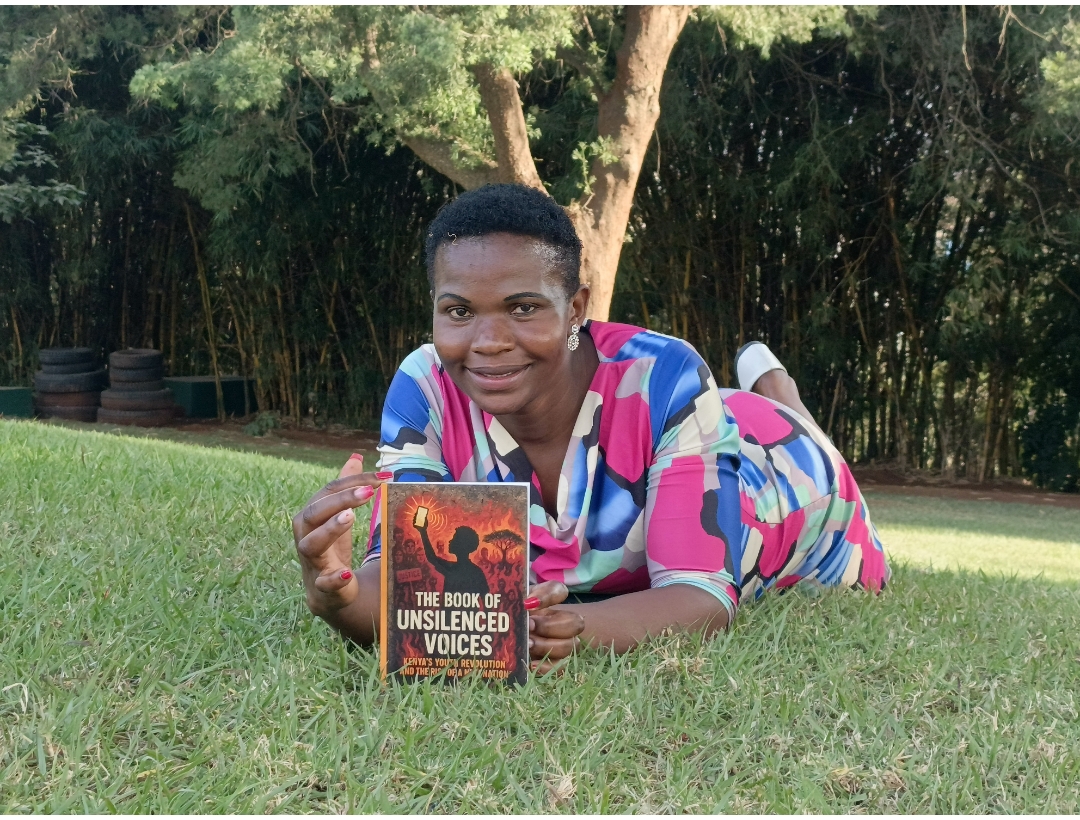
In the quiet corners of our world, where truth is often buried beneath bureaucracy and fear, The Book of Unsilenced Voices emerges like a tremor — subtle, yet seismic. It is not merely a book. It is a reckoning. A collection of testimonies, poems, and reflections from those who refused to be erased. Their words do not shout; they resonate. They do not demand attention; they command it.

As MushilaWrites marks two months since its digital birth — a platform rooted in climate advocacy, poetic resistance, and youth empowerment — this moment feels ripe for expansion. Featuring books like Unsilenced Voices is not a departure from advocacy; it is a deepening of it. Because every climate crisis is also a crisis of voice. Every policy failure is a failure to listen. And every silenced story is a missed opportunity for change.

The voices in this book are not fictional. They are lived. They belong to youth who blog from refugee camps, to women who write from war zones, to digital warriors who encrypt their truths behind firewalls and hashtags. Their stories echo the same urgency found in our own advocacy pieces on climate justice and community resilience. They remind us that silence is not neutral — it is complicit.

One testimony speaks of a girl who wrote poems on the back of ration cards, smuggling verses past checkpoints. Another recounts a boy who livestreamed his protest until the signal was cut — but not before his words reached thousands. These are not just stories. They are strategies. They are blueprints for resistance in an age where truth is both weapon and wound.

To those who have read The Book of Unsilenced Voices, we invite you to share your reflections. To those who haven’t, we urge you to seek it out — whether through your local library, independent bookstores, or global platforms like Goodreads and WorldCat. Let its pages challenge you. Let its stories stir you. Let its voices guide you.

© 2025 MushilaWrites | Designed by Victor Isaacs Mushila