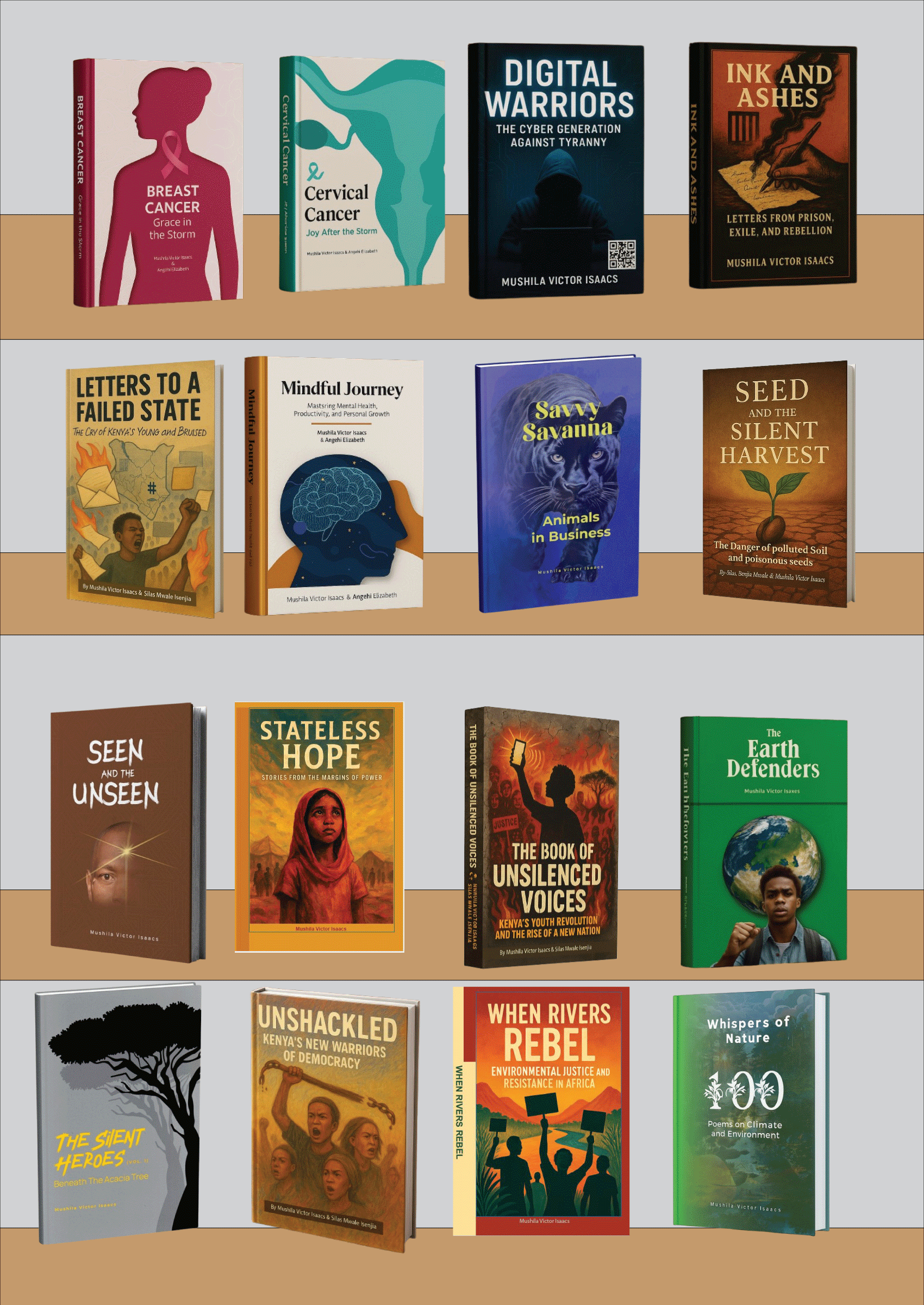

Breaking Chains of Silence in a World That Still Resists Freedom
To be unshackled is not merely to break iron chains—it is to reclaim the breath of truth in a world that has mastered the art of suffocation. The word itself carries weight, not just in its syllables but in its history. It is the echo of footsteps marching through colonial streets, the whisper of defiance in censored classrooms, the roar of youth who refuse to inherit silence. It is the heartbeat of those who have dared to speak when speaking was dangerous, to dream when dreaming was forbidden, to rise when rising meant risking everything.
Unshackled is not a metaphor—it is a reality lived by millions. It is a story I chose to tell, not just in ink and paper, but in the pulse of resistance that beats across continents. Writing it was not an act of literary indulgence—it was a confrontation. A reckoning. A refusal to pretend that freedom is evenly distributed, that justice is blind, or that silence is ever neutral.
The book emerged from the soil of lived experience, watered by the tears of those who have watched their rights eroded, their voices dismissed, their futures bartered by systems that speak the language of democracy but practice the rituals of oppression. It is a book born of urgency, crafted in the tension between hope and heartbreak, and offered as a torch to those still walking through the shadows.
In every chapter, I found myself wrestling with the paradox of our times: how nations can celebrate independence while imprisoning dissent, how elections can be held without choice, how development can be measured in GDP while communities starve for dignity. I saw how injustice wears new masks—how poverty is no longer just a lack of resources but a product of engineered inequality, how security is weaponized to silence protest, how education is offered without empowerment.
And yet, amid these contradictions, I saw something else: resilience. The quiet, stubborn, radiant resilience of ordinary people who refuse to be defined by their chains. There is the farmer who stands his ground against land grabbers backed by powerful interests. There is the student who organizes forums in underfunded schools, demanding not just textbooks but transformation. There is the woman who walks into boardrooms and refuses to shrink her voice to fit patriarchal expectations. There is the activist who documents abuses with nothing but a phone and a fierce belief in truth.
Literature, I have come to believe, is one of the last sanctuaries of rebellion. In a world where algorithms curate our realities and headlines are traded like stocks, the written word remains a space where nuance can breathe, where complexity can be honored, where truth can be told without interruption. Unsilenced Voices is a companion to this journey—an exploration of how literature and activism converge in the digital age.
The internet has become the new terrain of resistance. From Nairobi to New Delhi, from Lagos to Lima, youth are mobilizing not just in streets but in servers. Hashtags have become placards. Threads have become manifestos. Blogs have become battlegrounds. And in this digital uprising, Unshackled finds its place—not as a relic of print, but as a living document of defiance.
If you’re an educator, consider using Unshackled in your curriculum. If you’re an NGO, let’s collaborate on storytelling workshops. If you’re a youth leader, host a reading circle. If you’re a donor, support the translation of this work into local languages. If you’re a reader, leave a comment, write a review, or send a message. Let’s build a community around courage. Let’s turn pages into platforms.