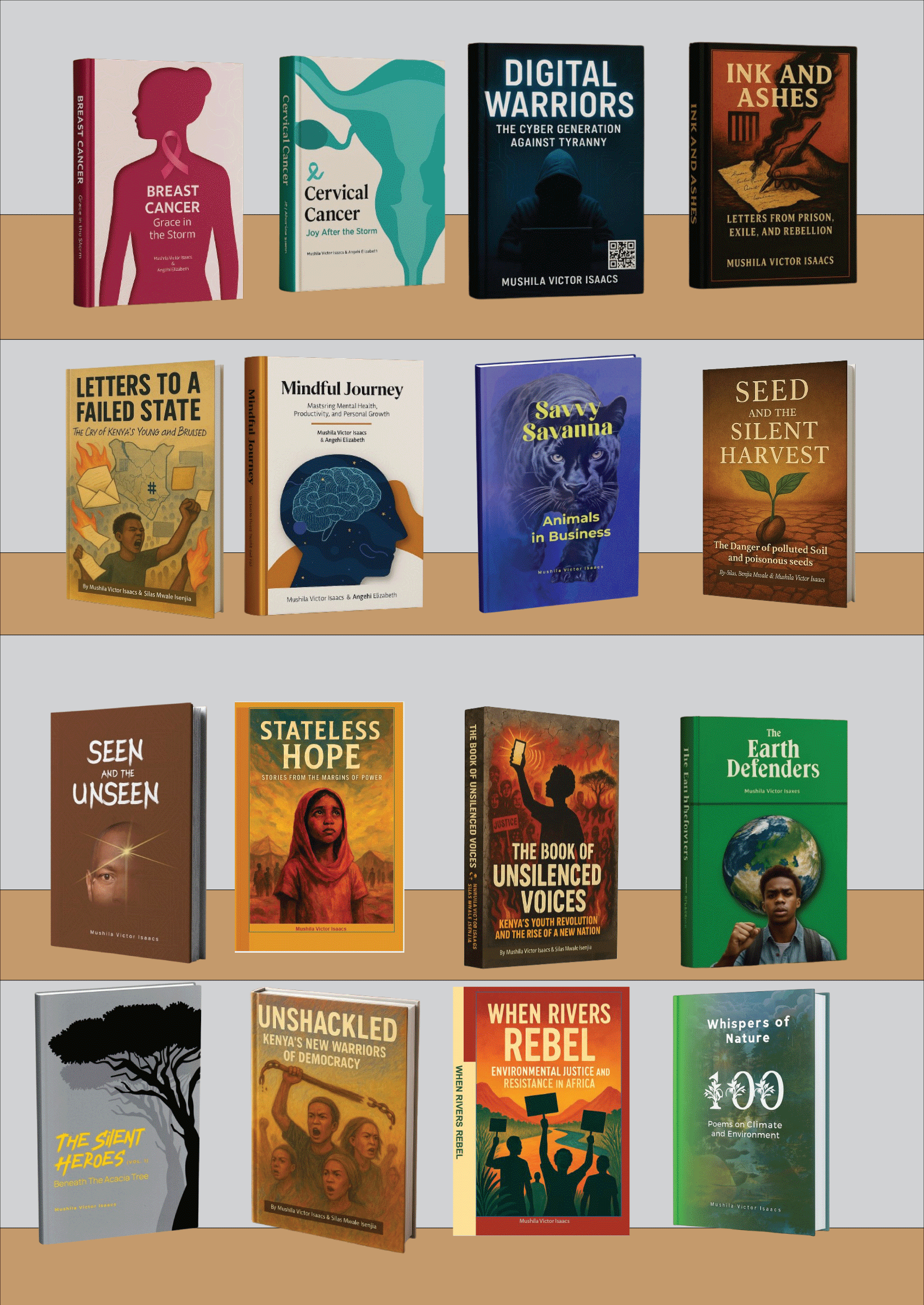

Letters to a Failed State
What does it mean to write to a state that has failed you? To pen letters not of admiration, but of anguish, disappointment, and defiance? Letters to a Failed State is born from that paradox—the audacity to address power even when it no longer listens, to hold leaders accountable even when they betray the people, and to speak truth even when the state is deaf.
A failed state is not defined only by the fall of institutions but by the betrayal of its people. It is the mother who cannot access healthcare for her child, the graduate who roams jobless while politicians fly private jets, the farmer whose harvest is stolen by corrupt systems. It is the silence of leaders when floods destroy villages, the negligence when hospitals collapse, and the arrogance of power when citizens cry for justice. To write letters to such a state is to demand a dialogue where none exists—to insist that the people’s voice cannot be erased.
In crafting Letters to a Failed State, I imagined every citizen as a writer. What would their letters say? A letter from a teacher would lament overcrowded classrooms and unpaid salaries. A youth would write about broken promises of empowerment. A refugee would narrate their exile. A patient would question why medicine is a luxury. These letters are both fictional and real, written not in ink alone but in the lived experiences of millions.
The act of writing letters to power has long been a weapon of change. From Martin Luther King Jr.’s “Letter from Birmingham Jail” to Nelson Mandela’s prison letters, history teaches us that when states fail, letters endure. They pierce walls of silence, traveling across time to remind both rulers and citizens of unfinished struggles.
Today, our letters are digital—tweets, blogs, open letters, petitions, viral videos. They are not whispered but broadcast, and they carry the weight of collective frustration and hope. Letters to a Failed State situates itself in this continuum: a modern anthology of resistance, where every word is a protest, every sentence a demand for justice, every page an act of survival.
The state may fail, but the people do not. They adapt, organize, and rise again. From the Arab Spring to African youth-led protests, history repeats a single truth: no failed system is beyond accountability. And even if collapse seems inevitable, renewal is always possible. The letters remind us that every fallen empire leaves behind seeds of new beginnings.
By writing Letters to a Failed State, I hope to contribute to that renewal. Not as a politician, but as a storyteller. Not as a policymaker, but as a citizen. Because the state belongs not to the elite few, but to the collective many. To write is to reclaim, to imagine, and to insist.
Explore: Digital Warriors: Tech for Justice and Youth Activism
Related Reading: Unsilenced Voices