🌿 Turning Waste into Worth
By Mushila Victor Isaacs
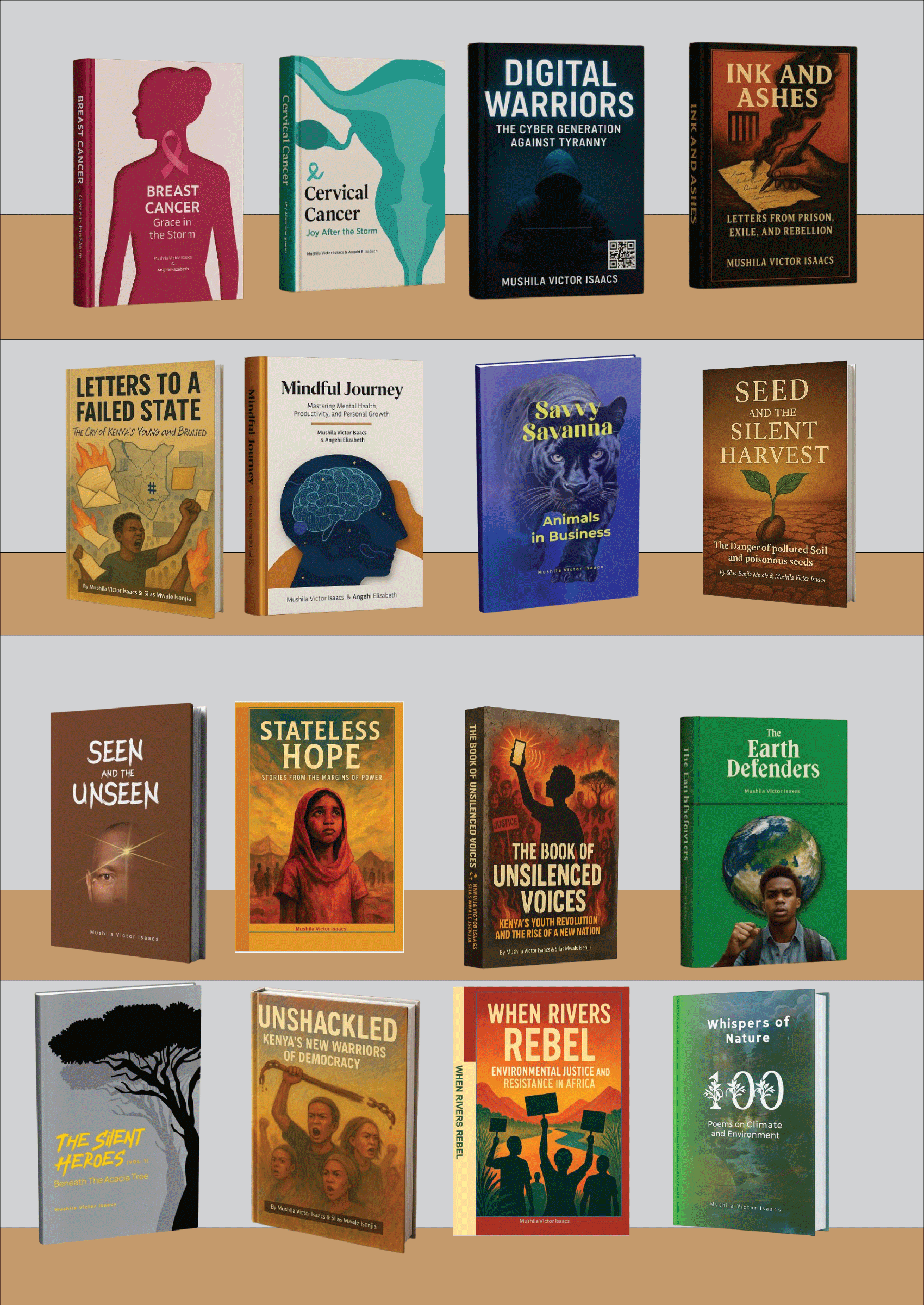
Author of Whispers of Nature – 100 Poems on Climate and Environment
Where Change Begins
In the heart of Africa’s low-income communities, hope often germinates from the soil of necessity. Beneath the cries for better livelihoods and the smoke of dwindling forests lies a story waiting to be rewritten — a story of empowered women, inspired youth, and communities redefining sustainability.
At MushilaWrites.com, we believe that storytelling and action go hand in hand. Through projects like the Eco-Briquette Training and Production Hubs and Kitchen Garden Initiative, we are transforming waste into opportunity while restoring dignity and healing the planet.
This initiative aligns with the United Nations Sustainable Development Goals (SDGs) — particularly SDG 1 (No Poverty), SDG 5 (Gender Equality), SDG 7 (Affordable and Clean Energy), SDG 13 (Climate Action), and SDG 15 (Life on Land).
Studies by the United Nations Environment Programme (UNEP) and the World Bank show that transitioning from charcoal to eco-briquettes can reduce indoor air pollution by up to 70% and save approximately 10–12 trees per ton of briquettes produced. Similarly, the Food and Agriculture Organization (FAO) highlights that briquette technology can reduce rural energy poverty while promoting sustainable livelihoods.
 Food and Agriculture Organization (FAO)
highlights that briquette technology can reduce rural energy poverty while promoting sustainable livelihoods.
Food and Agriculture Organization (FAO)
highlights that briquette technology can reduce rural energy poverty while promoting sustainable livelihoods.
What Are Eco-Briquettes — and Why They Matter
Eco-briquettes are compressed blocks of organic waste — rice husks, maize cobs, sawdust, coffee husks, and sugarcane bagasse — turned into clean-burning, smoke-free fuel. They replace charcoal and firewood, repurposing agricultural waste while reducing methane emissions.
- Reduce deforestation
- Lower household air pollution
- Create sustainable income streams
- Mitigate climate change
“So let us gather in the tree’s vast shade,
To honor the legacy creation made.
For the last standing tree, in its silent stand,
Is a testament to life, and the soul of the land.”“Let’s plant new seeds, let’s water with care,
Let’s grow a new forest, just and fair.
For in the last standing tree, there’s a dream to weave—
Of a world reborn, for all to believe.”~ The Last Standing Tree Poem.
The Project Concept: Turning Waste into Worth
- Project Title: Turning Waste into Worth — Empowering Women and Youth Through Eco-Briquettes
- Location: Bungoma, Kakamega, Machakos, Makueni, and Nairobi informal settlements (Pilot Phase)
- Duration: 6 months (expandable to 24 months)
- Beneficiaries: 10 women and youth directly; ~500 households indirectly
- Partners: Mushila Writes Environmental Initiative, UNEP, and Laudato Si’ Movement
Project Overview
The Eco-Briquette Training and Production Hub empowers women and youth to convert agricultural waste into clean energy — creating green entrepreneurs while promoting sustainability.
Key Components:
- Training and Capacity Building
- Production and Distribution
- Entrepreneurship and Marketing
- Community Awareness through storytelling
🌾 Practical Training: Teaching 10 Women and Youth
In Kakamega, ten locals gather under a mugumo tree, learning to turn maize husks into clean energy. Through workshops, participants gain skills to produce and sell eco-briquettes — earning from sustainability and healing their environment.
Environmental and Social Impact
| Impact Area | Expected Outcome |
|---|---|
| Deforestation Reduction | 1 ton of briquettes saves 12 trees annually. |
| Air Pollution Reduction | Indoor smoke reduced by 60–70%. |
| Income Generation | $50–$120/month per participant. |
| Waste Management | 2+ tons of waste repurposed monthly. |
| Community Awareness | 500+ people reached through outreach. |
SWOT Analysis
| Strengths | Weaknesses |
|---|---|
| Locally available materials; strong community support. | High initial equipment cost. |
| Inclusive women/youth model. | Limited awareness of technology. |
| Opportunities | Threats |
|---|---|
| Partnerships with UNEP, Laudato Si’, local governments. | Market competition from charcoal/LPG. |
| Expansion to schools and institutions. | Climate extremes affecting raw supply. |
💰 Project Budget (6-Month Pilot)
| Item | Description | Cost (USD) |
|---|---|---|
| Training Materials | Briquette molds, protective gear | 800 |
| Training Workshop | Venue, facilitation, meals | 600 |
| Equipment | Manual presses, drying racks | 1,200 |
| Awareness Campaign | Flyers, videos, social media | 500 |
| Seed Capital | Starter kits for trainees | 1,000 |
| Monitoring & Evaluation | Field visits and data tracking | 400 |
| Admin & Logistics | Coordination and communication | 500 |
| Total | $5,500 |
Funding and Partnership Opportunities
- UNEP Grants & Funding
- Laudato Si’ Action Platform
- Global Green Grants Fund
- USADF Grants
- UN Women Climate Change Program
🧩 Storytelling & Community Engagement
Storytelling is our bridge between action and awareness. Explore related stories:
Be Part of the Movement
Join us in turning waste into worth, despair into dignity, and forests of tomorrow into legacies of today.
Partner or Donate Today“Let’s plant new seeds, let’s water with care,
Let’s grow a new forest, just and fair.”
— The Last Standing Tree, Mushila Victor Isaacs